Braces are the most popular choice for orthodontic treatment.
Beneficial to both adults and children alike, braces are the most popular choice for orthodontic treatment.
Braces work by applying gentle pressure on your teeth and over time moving them into their desired positions. Your braces are then adjusted periodically to achieve the optimal result.
Today there are so many different types of braces available we can definitely find the right ones for you. And they are not what they used to be! Today braces are much less bulky and go virtually unnoticed. Some braces are clear and some have coloured brackets. Elastics come in heaps of colours and you can change certain elements with your braces each time you visit.
The time required for braces treatment will vary from person to person. This depends upon how far the teeth need to be moved, the age of the patient, the health of the teeth and gums during treatment and individual biology. An average treatment time is approximately 18 to 24 months. The best age to begin orthodontic treatment also varies depending on the patient. We generally recommend bringing your child in for an assessment at around 8 years of age, enabling treatment to be started at the ideal time. Adult patients may commence orthodontics at any age – it is never too late to go straight!
Experience the future of orthodontics with fully custom 3D-printed brackets that are designed uniquely for your smile.
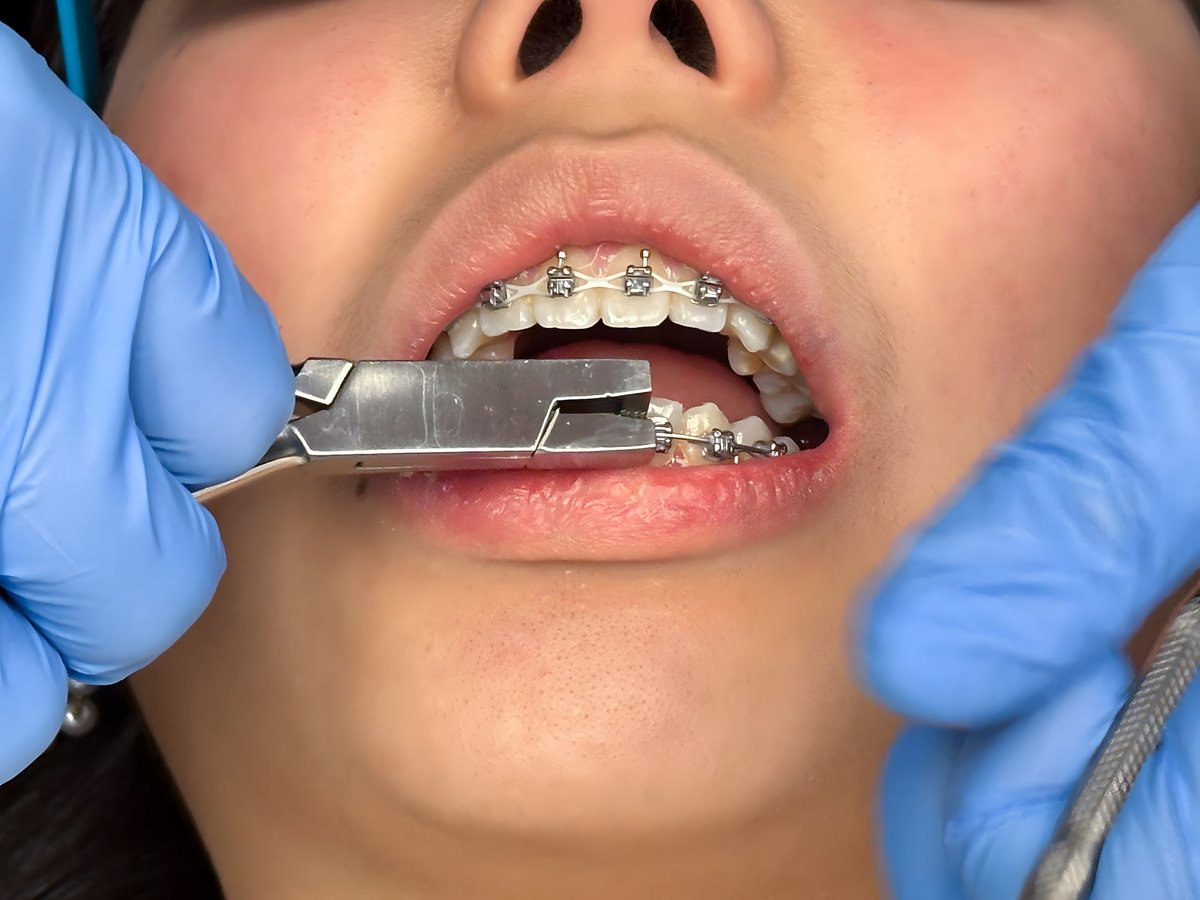
LightForce braces represent a revolutionary advancement in orthodontic treatment. Unlike traditional braces that use generic, mass-produced brackets, LightForce brackets are completely custom-made for each individual patient using advanced 3D printing technology.
Each bracket is designed based on a detailed 3D scan of your teeth, ensuring a precise fit and optimal positioning for the most efficient tooth movement possible.
Every bracket position is digitally planned to achieve your ideal smile outcome with minimal adjustments needed.
Custom brackets move teeth more efficiently, often reducing overall treatment duration compared to traditional braces.
The custom fit conforms perfectly to each tooth's unique shape, reducing irritation to cheeks and gums.
No messy impressions needed. We use advanced intraoral scanners for comfortable, accurate imaging.
Custom brackets require fewer wire changes and appointments while achieving excellent results.
View your predicted treatment outcome before you even begin with our digital smile simulation.
LightForce offers ceramic options for a more discreet appearance during your treatment.
Ready to experience the benefits of custom LightForce braces? Schedule your consultation today.
A comprehensive comparison of traditional metal braces and ceramic clear braces to help you choose the best orthodontic treatment for your smile.
When considering orthodontic treatment, many patients wonder whether to choose traditional metal braces or ceramic (clear) braces. Both options are highly effective at straightening teeth and correcting bite issues, but they each offer distinct advantages that may make one more suitable for your specific needs and lifestyle.
At Smart Smile Orthodontics, we offer both options and will help you make an informed decision based on your orthodontic needs, aesthetic preferences, and budget. This detailed comparison will help you understand the key differences between these two popular braces types.
Proven effectiveness for all cases
Metal braces consist of high-grade stainless steel brackets that are bonded to the front surface of each tooth. An archwire connects the brackets, and elastic bands (ligatures) hold the wire in place. The orthodontist adjusts the wires at regular intervals to gradually move teeth into their desired positions.
Discreet orthodontic treatment
Ceramic braces function identically to metal braces, using brackets, wires, and bands to move teeth. The key difference is that the brackets are made from a translucent or tooth-coloured ceramic material that blends naturally with your teeth, making them significantly less noticeable.
If cost is a primary concern, metal braces offer excellent value with proven results at a lower price point.
Professionals and public-facing roles often prefer ceramic braces for their discreet appearance.
Severe bite issues or complex tooth movements may be better treated with traditional metal braces.
If appearing "braces-free" is important to you, ceramic braces provide excellent discretion.
Still unsure which braces type is right for you? Our orthodontic specialists will recommend the best option for your unique needs.
Understanding the science behind orthodontic treatment and how braces gently move your teeth into perfect alignment.
Contrary to what many people believe, teeth aren't fixed in bone—they're held in place by a flexible periodontal membrane (periodontal ligament) that surrounds each tooth root. This remarkable biological system is what allows orthodontic treatment to work.
When steady, gentle pressure is applied to a tooth through braces, the body responds through a natural process called bone remodelling. On the side where pressure is applied, bone cells called osteoclasts break down bone tissue. On the opposite side, bone-building cells called osteoblasts create new bone.
This carefully controlled process allows teeth to gradually move through the bone into their ideal positions over time, resulting in a straighter, healthier smile.
Small squares bonded directly to teeth. They act as handles to grip each tooth and transfer forces from the archwire to move teeth precisely.
The main wire connecting all brackets. Made from specialised alloys that apply gentle, constant pressure to guide teeth alignment.
Tiny elastic bands that hold the archwire into the bracket slots. Available in various colours for personal expression.
Metal rings placed around back molars that provide stable anchor points for the archwire and orthodontic appliances.
Your orthodontist examines your teeth, takes photos, X-rays, and digital scans. Together, you'll discuss treatment options and create a personalised plan.
Duration: 1-2 appointments
Your orthodontist carefully bonds brackets to your teeth and threads the archwire through. This appointment typically takes 1-2 hours, and you may feel some tenderness afterward.
Duration: 1 appointment
Regular appointments every 4-8 weeks where your orthodontist adjusts wires, changes bands, and monitors progress. This is when the magic happens!
Duration: 12-36 months (varies)
Your braces are removed, teeth are cleaned and polished, and you'll receive retainers to maintain your beautiful new smile for years to come.
Duration: Ongoing retention phase
The simplest movement where the crown of the tooth moves while the root tip moves in the opposite direction. Used for initial alignment.
The entire tooth moves parallel to its original position. This is bodily movement requires more force and control from the braces.
The tooth rotates around its long axis. Often needed for teeth that have grown in at wrong angles.
Pushing a tooth deeper into the jawbone. Used for teeth that protrude too far or to correct gummy smiles.
Pulling a tooth out of the jawbone. Used to bring down teeth that haven't fully erupted or to build up worn-down teeth.
Widening the dental arch to create space. Can involve one or both jaws and helps resolve crowding issues.
Ready to begin your journey to a straighter, healthier smile? Our experienced orthodontic team is here to guide you every step of the way.
Protect your investment and ensure the best results with these essential care tips for your orthodontic journey.
Making smart food choices during treatment
Bagels, hard crusts, and pizza crusts can bend wires
Caramel, taffy, gummy bears, and chewing gum
Apples, carrots, and corn on the cob (cut into small pieces instead)
Take small bites instead of biting directly into sandwiches or burgers
Quick solutions for common brace issues
Use a cotton swab to gently push the wire flat against your tooth. If that doesn't work, cover the end with a small piece of orthodontic wax.
If a bracket detaches but stays attached to the wire, leave it in place and schedule a repair appointment as soon as possible.
Rinse with warm salt water 2-3 times daily. Apply orthodontic wax to any brackets or wires causing irritation.
Call our office to schedule a replacement. In the meantime, avoid sticky foods that could cause discomfort.
Need Urgent Help?
(07) 3889 8355Everything you need to know about braces
Ready to transform your smile with braces? Contact us today to schedule your consultation and take the first step toward a more confident you.
7/326 Gympie Road
Strathpine, QLD 4500
Australia
Monday: 7:30 AM - 4:00 PM
Tuesday - Wednesday: 7:30 AM - 5:00 PM
Thursday: 7:30 AM - 4:00 PM
Friday, Saturday & Sunday: Closed